Balatro Economy Guide: Interest, Rerolls and Scaling
BalatroBuddy is an unofficial fan site, not affiliated with LocalThunk or Playstack. Prices, payouts and card effects are checked against Balatro 1.0.1. The advice on what to buy and when is our opinion.
Money in Balatro buys the jokers that get you through the next blind, and it also grows by itself through interest. The hard part is knowing when to hold cash and when to spend it. This guide covers interest and payouts, rerolls, economy jokers, selling, and when to stop banking and start buying score.
How interest works
At the end of every round you earn $1 of interest for every $5 you hold, up to a default cap of $5 per round. That cap is reached at $25, so any money above $25 earns nothing on its own.
- Whole $5 steps only. $24 earns the same as $20, which is $4. The last dollar before a step is the one that matters.
- It counts what you hold when the round ends. The reward for beating that blind is not added until after interest is worked out, so it does not count this round. Money that arrives earlier, such as the $3 from a Gold Card held in hand, does count.
- You start with $4. The Yellow Deck starts with $10 more, for $14.
| Money held | Default cap | Seed Money | Money Tree |
|---|---|---|---|
| $9 | $1 | $1 | $1 |
| $25 | $5 | $5 | $5 |
| $50 | $5 | $10 | $10 |
| $100 | $5 | $10 | $20 |
Two vouchers raise the cap. Seed Money lifts it to $10 (you need $50 held to reach it), and its upgrade Money Tree lifts it to $20 (at $100). Money Tree unlocks after you earn the full interest cap for 10 rounds in a row. The joker To the Moon adds another $1 of interest for every $5 you hold, so at $25 you collect $10 instead of $5. It stacks with the higher caps.
The Green Deck turns interest off completely and pays $2 per unused hand and $1 per unused discard instead. If you play it, skip every interest card.
What you earn at the end of a round
When you beat a blind, the cash out screen adds up four things:
- The blind reward. Small Blind $3, Big Blind $4, Boss Blind usually $5. From Red Stake up, the Small Blind pays nothing.
- Unused hands. $1 for each hand you did not need. Beating a blind in fewer hands is real money.
- Interest. Up to $5 by default, as above.
- Jokers and tags that pay at cash out. For example Golden Joker and Rocket.
Discards do not pay by default. They only turn into money with the Green Deck, or with a joker like Delayed Gratification that pays when you leave them unused.
A full ante pays $12 in blind rewards (Small, Big and Boss) before any unused hands or interest. Full interest on all three rounds adds up to $15 on top.
When to reroll and when to save
A reroll costs $5 for the first one in a shop, then $1 more each time ($5, $6, $7 and so on). The price resets when you enter the next shop. A reroll only refreshes the card slots. It does not change the booster packs or the voucher.
Three rerolls in one shop cost $18, so rerolling is a luxury. Here is how we think about it (this is opinion, not a rule):
- Reroll with a goal. You need a specific kind of card, such as a +Mult joker, and the current shop has nothing that helps.
- Count the real cost. If you hold $27 and reroll for $5, you drop to $22 and your next interest falls from $5 to $4. The reroll really cost $6.
- Spend the surplus. Money above $25 earns nothing under the default cap, so that part is the cheapest to spend.
- Early on, 0 to 1 rerolls is plenty. Your first priority is a joker that scores.
Some things change the math. Reroll Surplus takes $2 off every reroll, and Reroll Glut takes $4 off in total, so a first reroll costs $1. Chaos the Clown gives one free reroll per shop, and Flash Card gains +2 Mult for every reroll. Our best vouchers guide covers when a reroll voucher is worth its $10.
Economy jokers
These jokers make money or turn held money into score. Prices are the base shop price.
| Joker | Cost | What it does | Our note |
|---|---|---|---|
 | Golden JokerCommon $6 Earn $4 at end of round Simple and reliable. The easiest one to use well. | ||
 | To the MoonUncommon $5 Extra $1 interest per $5 held Best once you already bank $25 or more. | ||
 | RocketUncommon $6 Earn $1 at end of round, up $2 each Boss Blind beaten Slow start, strong later. | ||
 | Delayed GratificationCommon $4 Earn $2 per unused discard if you use none Great if you rarely discard, a handicap if you do. | ||
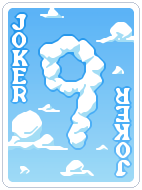 | Cloud 9Uncommon $7 Earn $1 per 9 in your full deck at end of round Needs extra 9s in your deck to shine. | ||
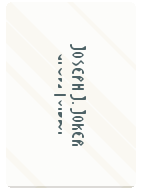 | Business CardCommon $4 Played face cards have a 1 in 2 chance to give $2 Needs a face card build. | ||
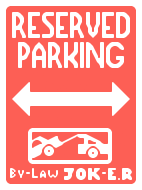 | Reserved ParkingCommon $6 Each face card held in hand has a 1 in 2 chance to give $1 Needs face cards you hold, not play. | ||
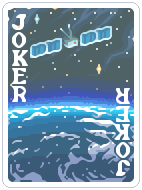 | SatelliteUncommon $6 Earn $1 at end of round per unique Planet used this run Fits a Planet heavy build. | ||
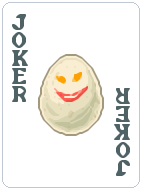 | EggCommon $4 Gains $3 of sell value each round Pays only when you sell it. | ||
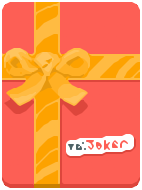 | Gift CardUncommon $6 Adds $1 of sell value to every joker and consumable each round Pays only when you sell. | ||
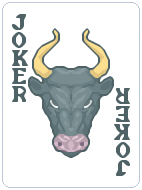 | BullUncommon $6 +2 Chips for each $1 you hold Turns your bank into score. | ||
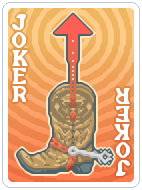 | BootstrapsUncommon $7 +2 Mult for every $5 you hold Turns your bank into score. |
Jokers that pay at cash out, like Golden Joker and Rocket, add to your money after interest is worked out, so they help the next round's interest, not this one's. Bull and Bootstraps bridge economy and scoring: the cash you hold for interest also adds Chips or Mult. Credit Card lets you go $20 into debt, which can buy a key joker early.
Joker slots are scarce, and every economy joker takes one that could hold a scoring joker. Our joker tier list ranks them all.
Selling and sell value
A card sells for about half its cost, rounded down, with a minimum of $1. A $6 joker sells for $3 and a $4 joker sells for $2. A few effects change that:
- Egg adds $3 to its own sell value every round, and Gift Card adds $1 to every joker and consumable you hold. Neither pays anything until you sell.
- Temperance gives you the total sell value of all your jokers, up to $50, so a held Egg or Gift Card turns into cash when you use it.
- Clearance Sale and Liquidation lower the sell value of cards you own, because sell value follows the discounted cost. A $6 joker sells for $3 normally and only $1 after Liquidation.
- The Hermit doubles your money up to $20, which is strongest when you hold $10 to $20.
Selling is normal. A joker that carried you through Ante 2 is often worth swapping out by Ante 4. Sell before you buy in the same shop so the cash is there when you need it.
Skipping blinds for tags
You can skip a Small or Big Blind to take the tag shown on it. You give up that blind's reward, the unused hand money, any interest, and the shop that follows. Boss Blinds cannot be skipped.
For the economy, these tags matter most:
- Investment Tag: $25 after you beat the next Boss Blind. This is the cleanest way to turn a skip into cash.
- Economy Tag: doubles your money, up to $40 extra. It is best when you already hold $20 or more.
- Speed Tag: $5 for every blind you have skipped this run, including this one.
Each skipped blind is a shop you do not get, and a harder blind arrives with fewer cards behind you. We would only skip when the tag is clearly worth more than that, and when your jokers can handle the next blind. On Red Stake and up the Small Blind pays nothing, so skipping it costs less (see the Gold Stake guide). Browse every tag in the tag database.
Moving from economy to scaling
Economy is a means, not the goal. Score targets climb much faster than your money does (see the ante score table), so at some point cash has to turn into scoring power. There is no exact switch, but these signs help:
- Your jokers stop comfortably clearing blinds. If you are using all your hands to just win, interest is no longer the priority.
- A strong scaling card shows up. An X Mult joker, a key Planet for your main hand, or a voucher like Telescope is usually worth dipping under $25 for.
- You are above the cap. Extra money earns nothing by default, so buy something.
- A Boss Blind is a problem. Spend to beat it.
What to buy once you stop banking: first, jokers that multiply (see the tier list). Second, Planet cards that level up the hand you play most. Third, vouchers like Grabber or Antimatter that give you more to work with. The beginner's guide covers early purchases, and the best decks guide covers the Yellow and Green decks.
To test a buy before you spend, put your jokers into the free score calculator and see what the change does to a hand against the blind. Our seeds list the shop route for each ante. One checked seed uses the Yellow Deck and its extra $10: Y9F3CTDS.
Questions
How does interest work in Balatro?
At the end of a round you earn $1 for every $5 you hold, up to a default cap of $5 (reached at $25). Seed Money raises the cap to $10 and Money Tree to $20. Interest counts whole $5 steps only, so $24 earns the same as $20.
How much money should I keep in Balatro?
$25 is the usual early target because it earns the full $5 of default interest. It is a guideline, not a rule. If a purchase helps you beat the next blind, spend it, because interest is worth nothing in a run you lose.
How much does a reroll cost in Balatro?
The first reroll in a shop costs $5 and each extra reroll in that same shop costs $1 more. The price resets in the next shop. Reroll Surplus takes $2 off and Reroll Glut takes $4 off in total.
What is the best economy joker in Balatro?
It depends on your run, and any ranking is opinion. Golden Joker is the simplest, paying $4 every round with no condition. To the Moon is strongest when you already hold a lot of cash, because it adds $1 of interest per $5 held.
Should I skip blinds for tags?
Sometimes. Skipping a Small or Big Blind gives up its reward and its shop, so it is worth it only when the tag is strong, such as an Investment Tag ($25 after the next Boss Blind). Boss Blinds cannot be skipped.